

As Democrats Claim Major Election Victories, Trump’s Presidential Veto, Global Strategy, and the Biblical Question of Whether the Voice of the People Reflects the Voice of God Take Center Stage

📖Discover Troy Anderson’s Inspiring Book Collection
Explore bestselling books investigating biblical prophecy, world events, faith, and the extraordinary stories shaping our times by seven-time #1 Amazon and ECPA Bestsellers author Troy Anderson.
A Political Earthquake in Washington—and a New Test for Trump
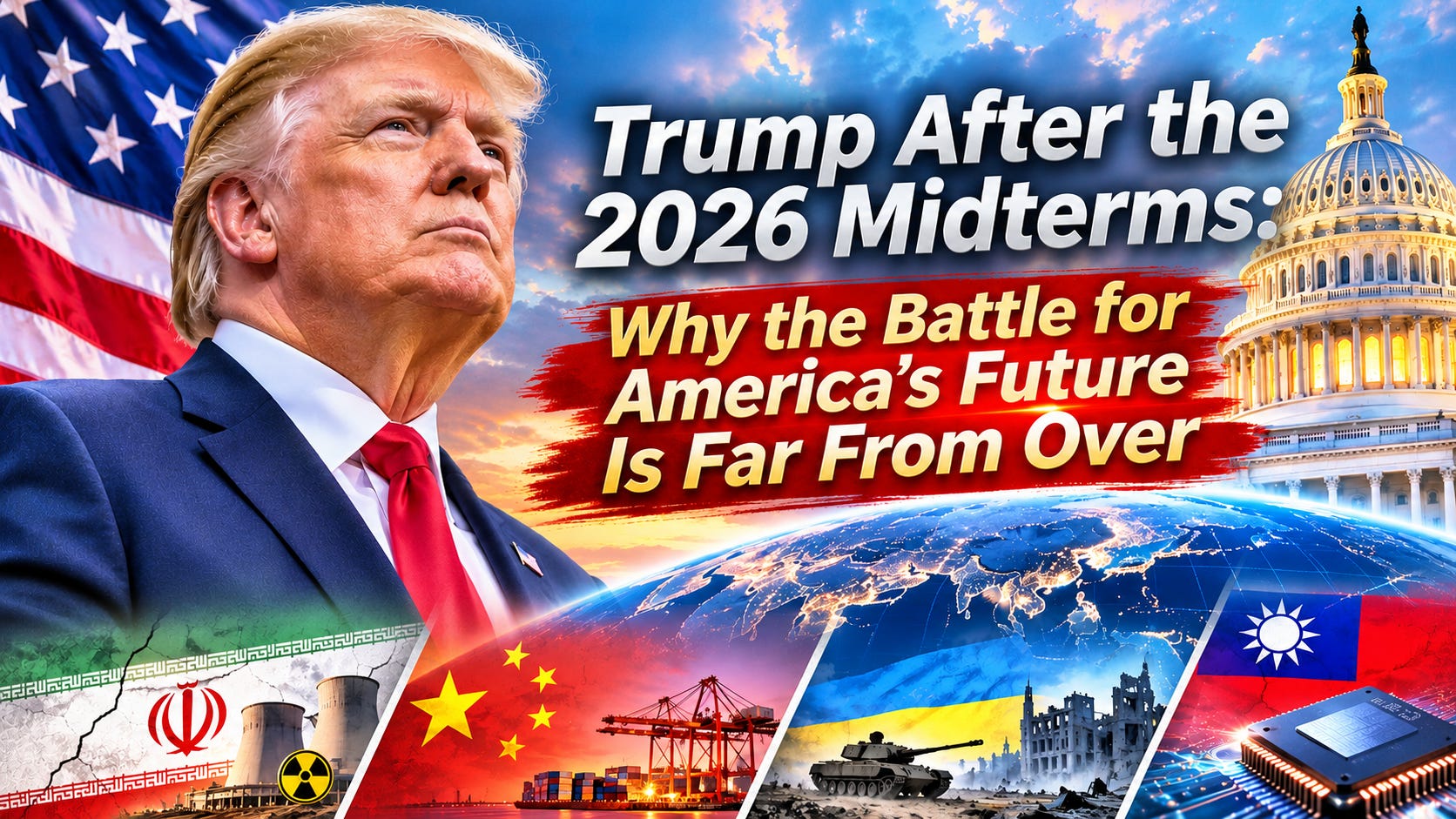
The American political landscape has shifted dramatically. In the November 3, 2026, midterm elections, Democrats captured control of both the House of Representatives and the Senate, delivering a sweeping setback to President Donald Trump and the Republican Party. The results reflected widespread voter frustration over the cost of living, the war with Iran, and concerns about the direction of the country. Yet as Washington prepares for divided government, a larger question emerges: Does this election mark the beginning of the end of Trump’s political influence—or the beginning of a different and potentially more consequential chapter of his presidency?
As an investigative journalist who has spent years examining the intersection of politics, national security, history, and biblical prophecy, I believe the answer requires looking beyond the election-night headlines. Trump has lost an important measure of congressional support, but he has not lost the presidency. His constitutional veto remains intact, his administration continues to exercise significant foreign-policy authority, and the geopolitical challenges confronting America have not disappeared.
The question is not simply who controls Congress. It is how Trump, the newly empowered Democratic opposition, and America’s international rivals will respond to the dramatic redistribution of political power.
Support Our Mission: Help Prophecy Investigators uncover the truth, investigate biblical prophecy, and explore the forces shaping our world. Become a paid subscriberand support independent journalism rooted in truth, discernment, and faith.
Why the Midterms Were So Difficult for Republicans
During Fox News’ election-night coverage, Sean Hannity offered a historical perspective that deserves consideration. He pointed to Ronald Reagan, Bill Clinton, and Barack Obama—three presidents who experienced significant midterm setbacks but subsequently recovered politically. Reagan’s Republicans suffered substantial House losses in 1982, yet he went on to win a landslide reelection victory in 1984. Clinton endured the Republican Revolution of 1994 before winning another term in 1996, while Obama survived the Tea Party wave of 2010 and secured reelection in 2012.
Hannity’s argument was straightforward: Midterm elections frequently become referendums on the sitting president, particularly when that president dominates the national political conversation. The American electorate has repeatedly demonstrated its willingness to impose congressional restraints on an administration without necessarily rejecting every element of its broader political vision.
Nevertheless, the magnitude of the 2026 Democratic victories should not be minimized. Voters expressed genuine concerns about economic pressures, government accountability, and the costs of military conflict. These concerns cannot simply be dismissed as misunderstanding or impatience. They represent political realities that any administration must confront.
The more difficult question is whether voters are judging policies that have already failed—or policies whose long-term consequences remain uncertain. Trump’s defenders argue that tariffs, industrial investment, border enforcement, and military pressure on Iran are intended to address structural problems that developed over decades. Critics counter that the administration must be judged by the consequences Americans are experiencing today. Both arguments will shape the national debate heading toward 2028.
Discover the Prophecies Behind Today’s Global Upheaval

TRUMP VS. THE BEAST: The Ten Kings Prophecy and the Bible’s Revelation of Coming Final Days
As America enters a new chapter of political uncertainty, #1 bestselling authors Pastor Paul Begley and Troy Anderson explore the “Ten Kings” prophecy, rise of the Antichrist, and the spiritual challenges facing our world.
Discover why biblical prophecies continue to raise urgent questions about the future—and why the ultimate message of Revelation is one of hope and victory through Jesus Christ.
The Presidential Veto: Trump’s Remaining Constitutional Firewall
One of the most consequential features of the American constitutional system is that congressional elections do not automatically transfer executive authority to the opposition party.
Article I, Section 7 of the U.S. Constitution grants the president the authority to veto legislation approved by Congress. Overriding that veto generally requires a two-thirds vote in both the House and Senate. With all members voting, that translates to 290 votes in the 435-member House and 67 votes in the 100-member Senate.
This distinction matters enormously. Democrats can advance legislation, conduct investigations, exercise oversight, and influence federal spending. They can also block presidential appointments requiring Senate confirmation and constrain the administration through Congress’s constitutional powers. But a congressional majority alone cannot automatically enact legislation over a presidential veto.
Trump emphasized this point during the election aftermath, signaling that he intends to use his remaining executive powers rather than retreat from political confrontation.
Yet the veto is not unlimited authority. It cannot compel Congress to approve presidential initiatives, appropriate money, or confirm nominees. Nor does it exempt executive actions from judicial review. America’s constitutional system was deliberately designed to distribute power among competing institutions.
In my view, the real significance of the 2026 election is that it creates a new period of confrontation and negotiation between a president determined to preserve his agenda and a Congress increasingly prepared to challenge it.
Could Trump’s Foreign Policy Become More Consequential?
As I examine the consequences of the 2026 midterm elections, one possibility stands out to me: With his domestic legislative agenda facing greater resistance in Congress, President Donald Trump may increasingly concentrate his attention on foreign affairs, national security, and the geopolitical challenges that could shape America’s future.
Throughout my career as an investigative journalist, I have studied how American presidents respond when their political influence in Washington becomes constrained. History suggests that divided government can change a president’s priorities, sometimes creating greater emphasis on diplomacy, international negotiations, and the exercise of executive authority.
I believe this possibility deserves particular attention because Trump is confronting an extraordinary convergence of global challenges. The conflict involving Iran and the danger of nuclear proliferation, China’s expanding military and technological capabilities, tensions surrounding Taiwan, the continuing war between Russia and Ukraine, and the restructuring of international trade relationships are not isolated developments. They are interconnected struggles involving economic influence, national sovereignty, military power, and the future international order.
These developments also raise questions I have explored in my books, including Trumpocalypse, The Trump Code, Designated Disrupter, and Trump vs. the Beast: How might the redistribution of global power affect America’s future? Could emerging alliances and international crises contribute to the geopolitical conditions described in biblical prophecy? And how should Christians interpret these developments without confusing political speculation with the certainty of Scripture?
Although Trump retains substantial executive authority, his decisions will remain subject to constitutional limits, congressional oversight, judicial review, and the realities of international diplomacy. A divided Congress could complicate his agenda even as his administration continues pursuing its foreign-policy objectives.
My central question is whether the next two years will be remembered primarily for political gridlock in Washington—or for consequential decisions involving Iran, China, Russia, and the future of America’s position in the world.
THE TRUMP CODE: Uncover the Mysteries Behind America’s Future
In this fascinating investigative bestseller, Troy Anderson explores the mysterious connections between Ingersoll Lockwood’s Baron Trump novels, Nikola Tesla, time travel theories, biblical prophecy, and Donald Trump’s extraordinary rise. Discover the historical mysteries, surprising parallels, and provocative questions that inspired the #1 bestseller The Trump Code. Discover The Trump Code →
Iran, China, and Russia: Watching Washington’s Political Realignment
From Tehran to Beijing and Moscow, foreign governments are undoubtedly studying the implications of America’s midterm elections.
Iran remains central to the administration’s national-security challenges. The ongoing conflict has imposed economic and political costs, particularly through energy-market disruptions. Trump’s supporters maintain that preventing Iran from obtaining nuclear weapons is a vital national-security objective. Critics question the costs, execution, and consequences of the military campaign.
China presents a different challenge involving trade, technology, industrial production, rare-earth minerals, and Taiwan. Even with a divided Congress, bipartisan concerns about China’s strategic ambitions are unlikely to disappear. However, disagreements over tariffs, industrial policy, and America’s approach to Taiwan could complicate the administration’s options.
Russia, meanwhile, will assess whether a divided Washington changes the prospects for negotiations concerning Ukraine, economic sanctions, and broader European security.
I would caution against assuming that every government opposed to Trump’s policies automatically benefits from Republican electoral defeats. International diplomacy is rarely that simple. Foreign leaders must evaluate not only the president’s political standing but also American military capabilities, congressional attitudes, economic conditions, and the credibility of U.S. commitments.
The essential question is whether America’s political divisions will weaken its strategic position—or force a more sustainable national consensus on the challenges ahead.
Vox Populi, Vox Dei? Is the Voice of the People the Voice of God?
Perhaps the most profound question emerging from this election is not political but spiritual.
The ancient Latin expression Vox populi, vox Dei means “the voice of the people is the voice of God.” It suggests that popular opinion carries a kind of ultimate authority. But Scripture offers a much more complicated understanding of human judgment.
Exodus 23:2 warns against following a multitude into wrongdoing or allowing collective pressure to distort justice. In Luke 23:23–24, the crowd demands the crucifixion of Jesus, and Pontius Pilate yields to its demands. These passages remind us that popular agreement is not necessarily equivalent to moral truth.
That principle, however, cuts in every political direction. It does not establish that voters who support Trump are more righteous than those who oppose him, nor does it mean that an election result unfavorable to a particular political movement is contrary to God’s will.
Rather, it reminds Christians that no political majority, president, party, or movement should be treated as an infallible expression of divine authority.
The American founders understood the dangers of concentrated power and human imperfection. In Federalist No. 51, James Madison famously observed that if men were angels, government would not be necessary. The Constitution’s system of separated powers and checks and balances reflects a practical recognition that even elected leaders require accountability.
For Christians, this offers an important lesson: We are called to respect legitimate governing institutions while measuring political claims against principles of truth, justice, humility, and righteousness.
Books Change Lives. Yours Could Be Next.

Have a story worth telling? Inspire Literary Group, founded by bestselling author Troy Anderson, offers professional ghostwriting, editorial development, and publishing guidance to help transform your vision into a powerful book that inspires lives and leaves a lasting legacy.
Ready to tell your story? Schedule a complimentary book, film, or television project consultation. Email: troyanderson@inspireliterary.com Phone: 949-887-1511
What the Election Means for America’s Spiritual Future
In my books, including Trumpocalypse, The Trump Code, Designated Disrupter, and Trump vs. the Beast, I have explored the relationship between American leadership, international power struggles, biblical prophecy, and the extraordinary changes unfolding across the world.
The 2026 midterms add another dimension to that investigation.
The Bible describes periods of political upheaval, international conflict, deception, and uncertainty. Jesus warned in Matthew 24 about wars, rumors of wars, and widespread turmoil. Yet He also cautioned His followers not to become alarmed or assume that every troubling event means the end has immediately arrived.
I believe Christians should approach this moment with that same combination of vigilance and restraint.
We should examine the facts, evaluate political leaders by their actions, pray for those in authority, and remain alert to developments that may carry spiritual significance. But we should not declare that a particular election fulfills biblical prophecy without compelling scriptural justification.
The church’s mission does not depend on which party controls Congress. It depends on Jesus Christ, whose authority transcends every earthly government.
The Next Two Years Could Reshape America’s Direction
The 2026 midterms have created a new political reality. Democrats have gained the power to challenge Trump’s legislative agenda, expand congressional oversight, and influence the national debate. Trump retains the presidency, his constitutional veto, and substantial responsibilities in foreign affairs and national security.
The result could be two years of confrontation, negotiation, and unexpected political realignment.
Sean Hannity’s historical comparisons remind us that midterm defeats do not necessarily determine the outcome of the next presidential election. At the same time, history provides no guarantee that Trump or his political successors will recover from this setback. The decisions made by both parties—and their consequences for American families—will matter far more than election-night rhetoric.
As I consider what lies ahead, I return to Proverbs 21:31:
“The horse is prepared against the day of battle: but safety is of the LORD.” (KJV)
Human beings can prepare, strategize, campaign, and exercise political authority. But Christians ultimately place their confidence not in the power of government, but in the sovereignty of God.
America’s political future remains uncertain. The responsibility of believers does not.
We must continue to seek truth, defend justice, pray for our leaders, and remain faithful to the calling Christ has entrusted to His church.
The election may have changed Washington. It has not changed the ultimate source of our hope.

I’ve Been to Heaven | A Remarkable Journey of Faith, Heaven, and Eternal Hope
What happens when our earthly journey comes to an end? In I’ve Been to Heaven, Steve Boyls and bestselling author Troy Anderson explore an extraordinary personal account of heaven, faith, and the hope of eternal life. As Dickens’s A Tale of Two Cities reminds us of the power of sacrifice and redemption, this inspiring book invites readers to reflect on the promises of Jesus Christ and the hope that reaches beyond the grave.
A Prayer for America and Its Leaders
Heavenly Father, we come before You at a moment of political division and uncertainty. We ask You to grant wisdom, humility, courage, and discernment to President Trump, the members of Congress, and all those entrusted with positions of authority. Guide our nation toward justice, peace, truth, and righteousness. Protect innocent lives, restrain the forces of war and destruction, and help our leaders seek wisdom beyond personal ambition and political advantage.
Lord Jesus, awaken Your church to its true calling. Help us resist fear, hatred, deception, and division. Strengthen our faith, renew our commitment to Your Word, and remind us that our ultimate citizenship is in Your eternal Kingdom. May America experience a genuine spiritual awakening that draws hearts toward repentance, reconciliation, and the saving grace of Jesus Christ.
For anyone reading who has not yet placed their faith in Jesus, we invite you to pray: Lord Jesus, I acknowledge that I am a sinner in need of Your forgiveness. I believe You died for my sins and rose again. I repent and turn toward You. Please forgive me, become my Lord and Savior, and lead me into the new life You have promised. In Jesus’ mighty name, Amen.
By Troy Anderson
Bestselling Author | Investigative Journalist
Prophecy Investigators
Your Book. Your Vision. Your Legacy!

From bestselling ghostwriting and editorial development to publishing guidance, Inspire Literary Group helps turn your story into a book that inspires, impacts lives, and leaves a lasting legacy.
Books Change Lives. Yours Could Be Next. Discover Inspire Literary Group →
Ready to share your story? Contact seven-time #1 Amazon and ECPA Bestsellers author and Founder Troy Anderson for a complimentary book, film, or television project consultation.
Email: troyanderson@inspireliterary.com
Phone: 949-887-1511