

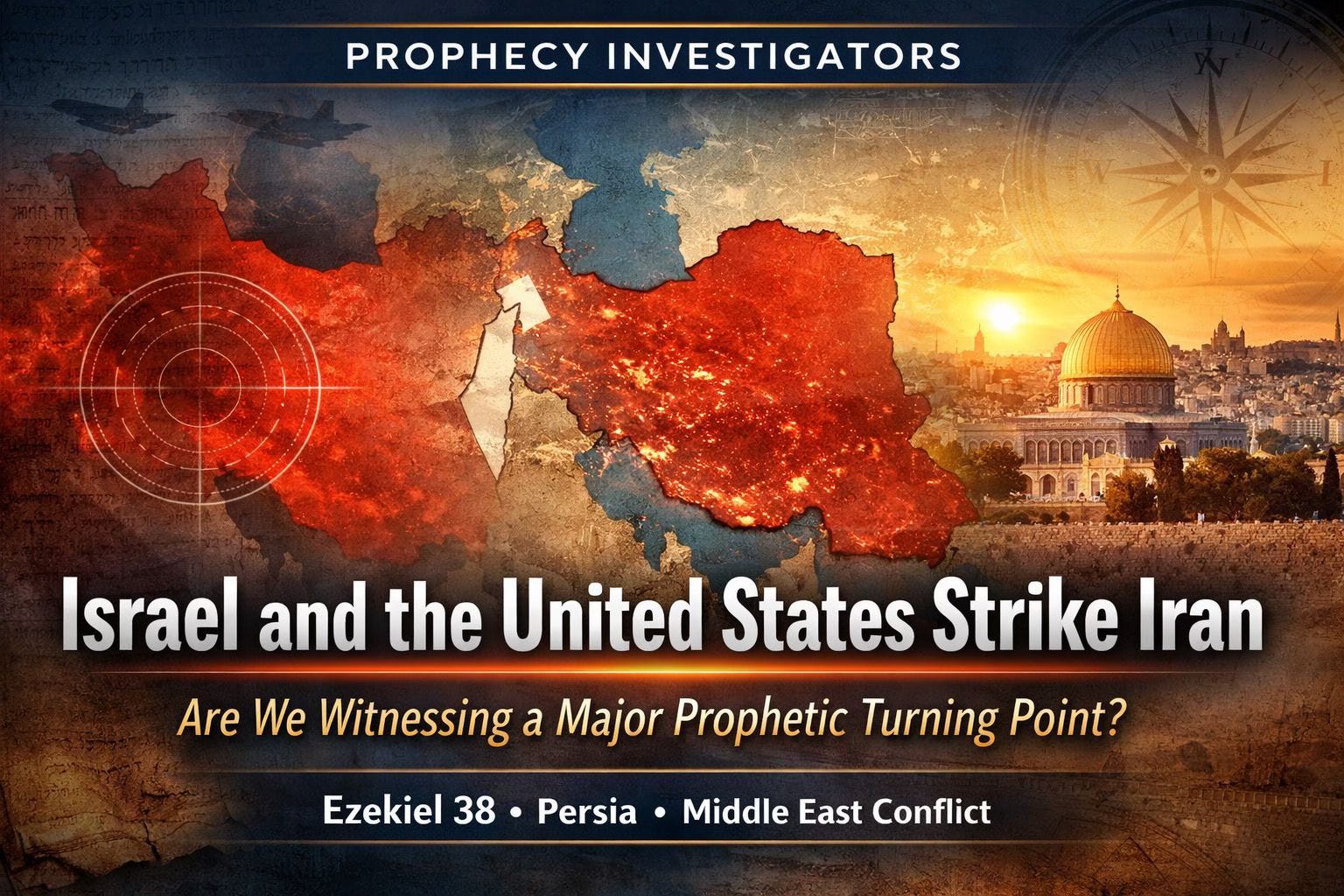

🎉📖Discover Troy Anderson’s Inspiring Book Collection🎉📖
Prophecy Investigators is a reader-supported publication. If you enjoy our articles and videos, please consider becoming a paid subscriber. You will receive access to read in-depth articles, watch exclusive interviews, and partner in our mission to spread the Good News of Jesus Christ.
As tensions escalate across the Middle East, students of biblical prophecy are revisiting ancient passages that speak of conflicts involving Israel and Persia.
Breaking Developments in the Middle East
On February 28, 2026, the world woke up to stunning news: Israel and the United States launched coordinated military strikes against Iranian targets, triggering one of the most serious escalations in the Middle East in decades.
Explosions were reported across multiple locations in Iran as military infrastructure and strategic facilities were targeted in the opening wave of attacks. The operation immediately raised fears that the long-simmering confrontation between Israel and Iran could erupt into a wider regional conflict.
In the days since those initial strikes, the situation has continued to develop rapidly. Retaliatory attacks, rising regional tensions, and growing international concern have placed the Middle East once again at the center of global attention.
For many students of biblical prophecy, events like these naturally raise an important question:
Could developments in the Middle East today be setting the stage for conflicts described in Scripture, including World War III or the “War of Gog and Magog”?
Situation Report — Current Developments
As of March 4, 2026, the crisis between Israel, the United States, and Iran continues to unfold rapidly, with several developments intensifying concerns about a broader regional conflict.
Continued Air and Missile Strikes
Israeli and U.S. forces have reportedly continued targeted air and missile strikes against Iranian military infrastructure, including weapons storage sites, missile facilities, and strategic command centers believed to support Iran’s regional military operations.
Military analysts say these strikes appear designed to degrade Iran’s ability to project power across the Middle East, particularly through its network of allied militias and proxy forces operating in neighboring countries.
The operations have also focused on preventing the movement of advanced weapons systems that could threaten Israel or American forces stationed in the region.
Iranian Retaliation
Iran has responded with missile and drone attacks aimed at American and allied facilities across the Middle East, according to multiple regional security reports.
These retaliatory actions have reportedly targeted military bases, intelligence installations, and strategic infrastructure linked to Western and Israeli operations.
While the full extent of the damage remains unclear, the attacks signal that Tehran is attempting to demonstrate its ability to respond despite the ongoing strikes against its own military assets.
Mobilization of Regional Militias
Another major concern for defense analysts is the mobilization of Iran-aligned militias across several countries in the region.
Groups believed to be aligned with Iranian interests have reportedly increased their operational readiness in areas such as:
Iraq
Syria
Lebanon
Yemen
These militias have historically served as Iran’s regional force multipliers, allowing Tehran to project influence without direct conventional warfare.
If these groups become actively involved, the conflict could quickly evolve from a bilateral confrontation into a multi-front regional crisis.
Global Energy Markets React
The escalating tensions have already begun affecting global markets, particularly the energy sector.
Oil prices have surged amid fears that the conflict could threaten critical shipping lanes in the Persian Gulf, including routes that carry a significant portion of the world’s oil supply.
Any disruption to these shipping lanes could send shockwaves through global energy markets, affecting fuel prices and economic stability far beyond the Middle East.
A Conflict With Global Implications
Military strategists caution that the current crisis could unfold in several different ways.
Diplomatic intervention could still stabilize the situation and prevent further escalation. However, if retaliation continues and additional regional actors become involved, the conflict could expand into a wider Middle East war involving multiple nations.
For students of biblical prophecy, the rapid escalation has renewed interest in passages of Scripture that describe future conflicts centered around Israel and the surrounding nations.
These developments are prompting many prophecy watchers to revisit ancient texts that speak of alliances, regional wars, and global upheaval in the last days.

Designated Disrupter: Trump and Other Unlikely Agents of Revival
(Charisma House/FrontLine, January 6, 2026) | From Pulitzer Prize–nominated journalist and six-time #1 bestselling author Troy Anderson, Designated Disrupter, the #2 “Hot New Release in “Church & State Religious Studies” on Amazon, reveals how God is using “designated disrupters” to confront evil, disrupt corruption, and awaken a generation now breaking out in revival. Discover your role in the Holy Spirit’s unfolding global awakening. Order now.
Major Developments in the Israel–U.S.–Iran Conflict
In the days following the initial strikes, additional details have begun to emerge regarding the objectives and impact of the Israeli-American operation.
According to regional analysts and intelligence reports, the coordinated strikes were designed to target key elements of Iran’s military infrastructure, including missile production facilities, drone bases, weapons depots, and command centers believed to support Iran’s regional military network.
The operation also appears aimed at weakening Iran’s ability to coordinate military activity through its network of allied militias and proxy forces across the Middle East.
One of the most dramatic developments reported during the opening phase of the operation was the targeted killing of several senior Iranian officials. According to regional reports, high-ranking members of Iran’s political and military leadership were among those killed during precision strikes in Tehran and other strategic locations.
Analysts describe these attacks as part of a broader strategy sometimes referred to as “decapitation strikes,” intended to disrupt Iran’s command structure and slow its ability to coordinate retaliation.
Meanwhile, Iran has responded with missile and drone attacks against American and allied facilities across the region, targeting military bases and strategic installations connected to Western forces.
Regional militias aligned with Iran have also increased their activity, raising concerns that the conflict could expand into multiple fronts across the Middle East.
At the same time, the conflict has drawn reactions from governments around the world.
Several Western nations have expressed support for Israel and the United States, providing diplomatic backing and defensive cooperation as tensions continue to rise across the region. Other countries, including Russia and China, have criticized the strikes and called for restraint while urging diplomatic negotiations.
The conflict has also triggered significant economic ripple effects. Oil prices surged amid fears that the confrontation could threaten shipping lanes in the Persian Gulf, particularly the Strait of Hormuz, one of the most important energy corridors in the world.
Roughly one-fifth of the world’s seaborne oil supply passes through this narrow waterway, making any disruption there a potential global economic shock.
As tensions remain high and military activity continues, analysts warn that the situation could either stabilize through diplomatic pressure or expand into a broader regional war involving multiple nations.
Why Students of Bible Prophecy Are Watching Closely
For many observers, the current conflict represents another chapter in the long and complex history of geopolitical tensions in the Middle East.
However, for students of Bible prophecy, developments involving Israel and Iran often draw attention to ancient passages of Scripture that describe future conflicts centered around the nation of Israel.
One of the most frequently discussed passages is found in Book of Ezekiel, where the prophet describes a dramatic future war involving a coalition of nations that rise against Israel - the “War of Gog and Magog.”
In Book of Ezekiel chapters 38 and 39, the prophet records a vision of a massive alliance assembling against Israel in what appears to be one of the most significant conflicts described in the Hebrew Scriptures.
Among the nations specifically mentioned in this prophecy is Persia, the ancient name historically associated with modern-day Iran.
Because of this reference, tensions involving Iran and Israel have long drawn attention from prophecy scholars and Bible students seeking to understand how these ancient texts might relate to modern events.
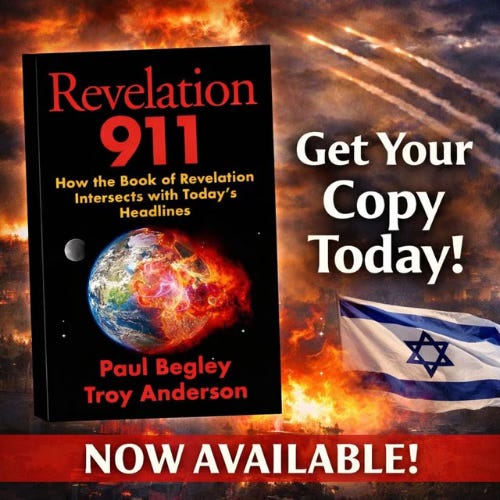
Revelation 911 reveals the prophetic signs converging before our eyes—are you ready? The #1 bestseller Revelation 911 (Salem Books/Regnery Publishing) by Pastor Paul Begley and bestselling journalist Troy Anderson connects end-times prophecy with breaking global events. This urgent book calls believers to discern the times, anchor their hope in Christ, and be ready for His soon return
Ezekiel’s Prophecy of a Northern Coalition
In Book of Ezekiel 38:5, the prophet lists Persia among the nations involved in a future alliance that will rise against Israel:
“Persia, Cush, and Put will be with them, all with shields and helmets.”
For many readers of Scripture, the mention of Persia — historically associated with modern-day Iran — has long been notable whenever tensions between Israel and Iran escalate.
In Ezekiel chapters 38–39, the prophet describes a conflict in which a coalition of nations gathers against Israel in what many scholars believe may represent one of the most dramatic confrontations described in biblical prophecy.
The passage portrays a large alliance assembling against Israel in the latter days. While scholars differ in their interpretations of how and when this prophecy will ultimately be fulfilled, the presence of Persia in the list of nations has drawn particular attention from prophecy students whenever modern developments involve Iran and Israel.
An Interesting Detail in the Prophecy
Another detail often noted by students of biblical prophecy is that the passage focuses primarily on God’s direct intervention rather than military alliances defending Israel.
While the prophecy mentions certain nations observing or questioning the invasion, it does not clearly describe outside powers coming to Israel’s aid during the conflict. Because of this, some interpreters believe the scenario may depict a time when Israel appears largely alone, with the ultimate outcome determined not by geopolitical alliances but by divine intervention.
A Motive Mentioned in the Prophecy
Another intriguing detail appears in Book of Ezekiel 38:12–13, where the prophet describes the motives behind the invading coalition.
The passage suggests that the attack is driven not only by military ambition but also by the desire for plunder and economic gain:
“to take spoil and to take plunder, to turn your hand against the waste places that are now inhabited and against a people gathered from the nations… to seize spoil and carry off plunder.”
The text goes on to describe other nations observing the invasion and asking whether the attackers have come “to carry away silver and gold, to take away cattle and goods, to take great spoil.”
For many students of prophecy, this raises an interesting question: could economic motives — such as resources, wealth, or strategic control — play a role in the future conflict described by Ezekiel?
While the exact meaning of these verses is debated among scholars, the reference to plunder and wealth has led some interpreters to note how economic interests have often played a major role in conflicts throughout history.
Israel Living in Security
Another detail in the prophecy appears in Book of Ezekiel 38:11, where the invading leader describes Israel as living in relative security before the attack:
“I will go up against a land of unwalled villages; I will go against a peaceful people who dwell safely, all of them dwelling without walls, and having neither bars nor gates.”
For many students of prophecy, this verse raises interesting questions. The description suggests a time when Israel appears to be living with a sense of security and prosperity before the sudden invasion described in the passage.
Interpretations of this verse vary widely. Some scholars believe the imagery reflects the ancient world, where fortified cities were common, while others see it as a description of a future period when Israel experiences relative stability before a major geopolitical crisis unfolds.
Why Some Observers Find This Notable
In today’s world, Israel remains one of the most technologically advanced and economically dynamic nations in the Middle East. Despite ongoing regional tensions, the country has developed sophisticated defense systems and strong international partnerships.
Because of this, some prophecy observers find the description of Israel living in relative security before the invasion to be an intriguing detail when considering how the events described in Ezekiel might unfold.
A Prophecy That Has Long Drawn Attention
Because Persia is specifically named in this passage, developments involving Iran and Israel often draw renewed interest from students of biblical prophecy. While Scripture does not provide a precise timeline for when these events will occur, the appearance of nations mentioned in the text on today’s geopolitical stage naturally prompts many observers to revisit these ancient prophecies and consider how they might relate to unfolding world events.
Why This Is Interesting Today
In a world where energy resources, trade routes, and economic influence often drive geopolitical tensions, some observers find it notable that the prophecy itself mentions economic motives behind the coalition’s actions.
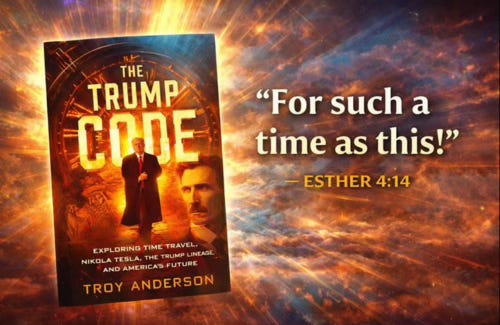
Get your copy of Troy Anderson’s #1 bestseller The Trump Code (Charisma House / FrontLine) today.
In The Trump Code, Pulitzer Prize–nominated investigative journalist and six-time #1 bestselling author Troy Anderson takes readers on a gripping journey through history, prophecy, and current events—revealing astonishing connections between Ingersoll Lockwood’s The Baron Trump Collection, America’s destiny, and the Trump phenomenon. From time travel theories and Nikola Tesla to hidden lineages and prophetic turning points, this explosive bestseller challenges conventional narratives and calls readers to discern the times we are living in.
Zechariah’s Warning About Jerusalem
Another passage frequently discussed by prophecy researchers appears in Book of Zechariah chapter 12, which describes a time when Jerusalem becomes the focus of global tension.
The prophet writes that Jerusalem will become:
“a cup of trembling unto all the peoples round about.”
For many students of prophecy, this passage appears to describe a period when conflicts surrounding Israel draw in multiple nations and create widespread instability.
A Note of Caution
While current events can sometimes echo themes found in biblical prophecy, responsible prophecy study requires caution.
Scripture does not provide modern country names, exact timelines, or specific dates for prophetic events. Throughout history, many conflicts in the Middle East have led observers to speculate about prophetic fulfillment.
For this reason, many theologians caution against declaring that any current event represents the definitive fulfillment of prophecy.
However, the Bible does repeatedly indicate that the Middle East — and Israel in particular — will play a central role in the unfolding of world events in the last days.
Key Developments to Watch
Prophecy Investigators will continue monitoring several developments in the coming days and weeks, including:
Whether the conflict expands beyond Israel and Iran
Possible involvement of additional regional powers
Threats to global energy supplies and shipping routes
Diplomatic efforts to contain the conflict
Military alliances forming across the region
Each of these factors could significantly influence the trajectory of the crisis.
A Region That Continues to Shape World History
Regardless of how the current conflict unfolds, one fact remains clear: The Middle East continues to occupy a central place in world affairs — just as it has throughout history.
For students of biblical prophecy, the region remains a place to watch carefully, not with fear, but with discernment. Events may unfold quickly, or tensions may ease in the coming days. Either way, developments in this region will continue to command global attention.
Prophecy Investigators will continue providing updates as the situation develops.
Watching the Times with Wisdom
As events continue to unfold in the Middle East, it is important to approach both current news and biblical prophecy with discernment and humility.
History has shown that conflicts in this region can escalate rapidly and draw in multiple nations, while at other times tensions de-escalate through diplomacy and restraint. At this stage, it remains too early to know how the present crisis between Israel, Iran, and the United States will ultimately unfold.
What is clear, however, is that the Middle East continues to occupy a central place in world history—just as it has throughout the pages of Scripture.
For students of Bible prophecy, passages such as those found in Ezekiel and Zechariah serve as reminders that the Bible anticipated a time when the nations surrounding Israel would once again become the focus of global attention.
Whether current events represent the early stages of larger developments or simply another chapter in the long history of Middle Eastern conflict remains to be seen.
But one thing is certain: the world is watching.
And for believers, moments like these serve as a reminder of the words of Jesus in the Gospel of Matthew:
“You will hear of wars and rumors of wars… see that you are not troubled.”
— Matthew 24:6
Rather than responding with fear, Scripture calls believers to remain watchful, prayerful, and grounded in faith.
As global events continue to unfold, the call remains the same—to seek wisdom, pursue peace, and trust in God’s ultimate purposes for history.
Prophecy Investigators will continue monitoring developments and providing updates as this situation evolves.
A Prayer for the Nations
Heavenly Father,
In a time of rising tensions and uncertainty across the world, we come before You seeking Your wisdom, protection, and peace.
Lord, we pray for the people of Israel, for the United States, and for the people of Iran and the entire Middle East. Protect innocent lives, comfort families living under the shadow of conflict, and restrain the spread of violence.
We ask for Your guidance for leaders and decision-makers in every nation. Grant them wisdom, humility, and clarity as they navigate decisions that affect millions of lives.
Father, we pray for the men and women serving in the military who stand in harm’s way. Watch over them, guard them, and bring them safely home to their families.
We also pray for the peace of Jerusalem, as Your Word instructs us. May Your hand of protection remain over the land and over the people who dwell there.
Lord, in a world filled with uncertainty, remind us that You are still sovereign over history. Nations may rise and fall, conflicts may come and go, but Your purposes will ultimately prevail.
Help us to remain watchful without fear, faithful without compromise, and prayerful in every season.
May Your peace guide our hearts, and may Your truth shine as a light in uncertain times.
We ask these things in the name of Jesus Christ.
Amen.
Stay Watchful
As Jesus reminded His followers in Gospel of Matthew 24:42:
“Watch therefore: for ye know not what hour your Lord doth come.”
In uncertain times, the call to remain watchful, thoughtful, and prayerful remains as important as ever.
Troy Anderson & Prophecy Investigators Team
Tracking world events in the light of biblical prophecy.
📚 Dive into Troy Anderson’s Prophetic Books:
📖 Trump vs. The Beast
📖 Designated Disrupter
📖 I’ve Been to Heaven
📖 The Trump Code
📖 Revelation 911
📖Your Mission in God’s Army
📖The Military Guide to Disarming Deception
📖The Military Guide to Armageddon
📖Trumpocalypse
📖The Babylon Code
Each of these books is more than a story—they are a call to courage, revival, and prophetic insight for such a time as this


Your Book. Your Vision. Your Legacy! We believe your story matters. Whether you’re writing to impact hearts, spark revival, or leave a legacy for generations,
our team of 17 bestselling ghostwriters, editors, and publishing experts will help bring your vision to life—from the first word to final release. Let’s write a story that echoes into eternity. Visit www.inspireliterary.com to start your journey today. Contact six-time #1 bestselling author and Inspire Literary Group Founder Troy Anderson at troyanderson@inspireliterary.com or 949-887-1511 for a free consultation on your book/film/TV series idea.