

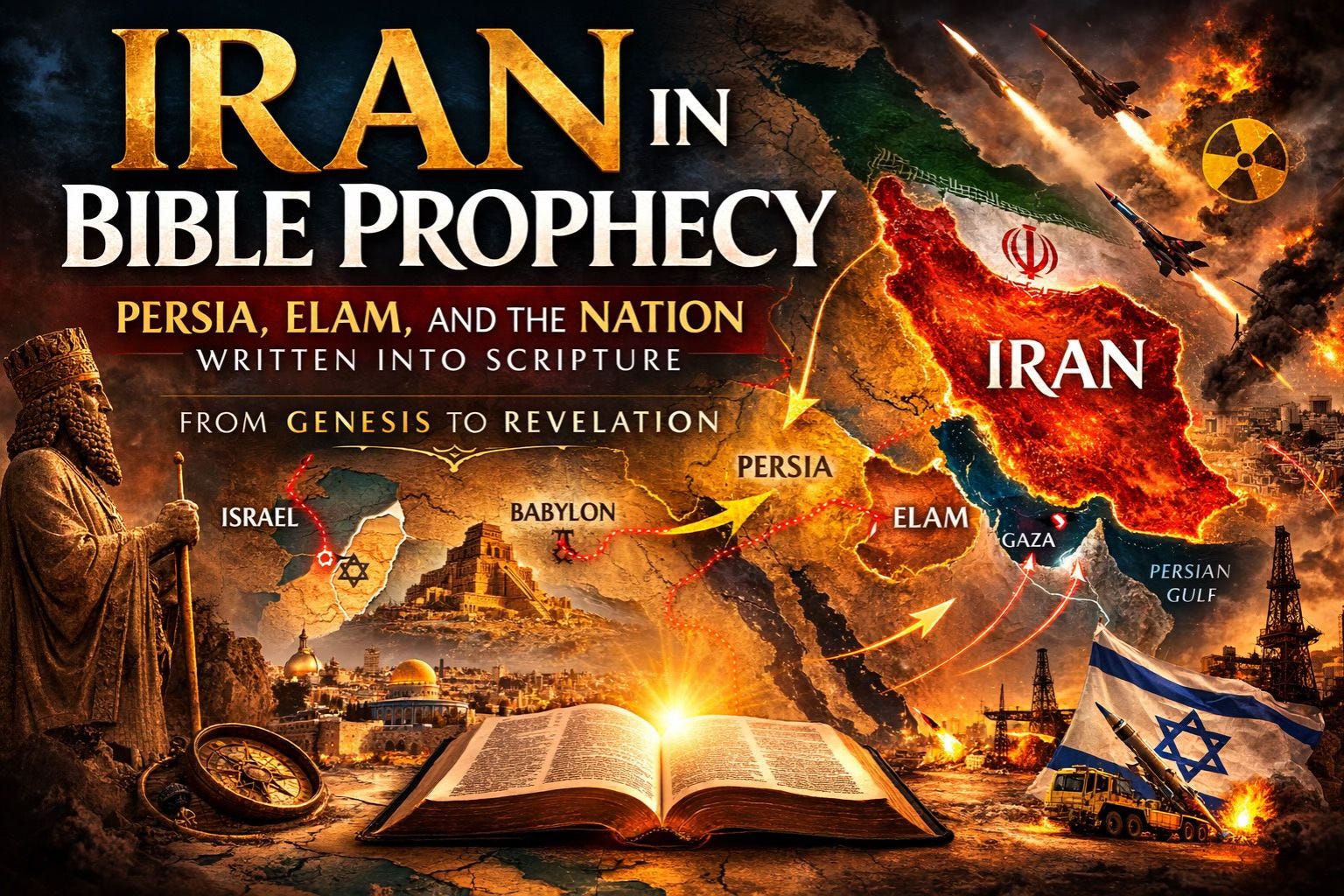

🎉📖Discover Troy Anderson’s Inspiring Book Collection🎉📖
Prophecy Investigators is a reader-supported publication. If you enjoy our articles and videos, please consider becoming a paid subscriber. You will receive access to read in-depth articles, watch exclusive interviews, and partner in our mission to spread the Good News of Jesus Christ.
The Nation the Bible Saw Coming
Iran is back in the headlines.
Missile attacks. Nuclear ambitions. Proxy wars stretching from Gaza to Lebanon to the Persian Gulf. Shifting alliances. Escalating rhetoric. A region already trembling under the weight of history now seems poised once again on the edge of something far greater.
To most observers, Iran’s rise on the world stage looks like geopolitics. It appears to be the predictable collision of ideology, military ambition, religion, oil, and regional power. But to students of Bible prophecy, something far more extraordinary may be unfolding.
Because long before modern Iran emerged as a nation-state, Scripture already spoke of a power called Persia. It appears in the Bible again and again—not as a footnote, but as a nation woven into the very fabric of redemptive history.
In Genesis, its ancient roots appear among the first nations after the Flood.
In Isaiah, a Persian king is called by name more than a century before he is born.
In Daniel, Persia rises as one of the great prophetic empires of world history.
In Esther, Persia becomes the stage upon which the Jewish people are preserved from annihilation.
At the birth of Jesus, wise men from the East—very likely from the Persian world—arrive to worship the Messiah. And then, in one of the most sobering prophetic visions of the Old Testament, Ezekiel warns that Persia will stand among the nations that rise against Israel in the last days.
From Genesis to the end-time prophecies, Persia—modern Iran—is written into the biblical storyline. Yet the Bible does not present Iran as merely an enemy. Its prophetic journey is far more profound—and far more paradoxical.
Persia was once used by God to restore Israel. Persia later appears in visions of global conflict. And astonishingly, the prophet Jeremiah declares that even after judgment, Elam—the ancient heartland of Iran—may yet experience restoration in the latter days.
In other words, Iran’s biblical story is not simply one of war. It is a story of empire, prophecy, judgment, spiritual conflict, and the breathtaking possibility of redemption. To understand the headlines of our time, we must first understand what Scripture revealed long ago.
From Elam to Persia: Iran’s Story Begins in Genesis
The story of Iran in the Bible begins not in Ezekiel or Revelation, but in the earliest chapters of Scripture.
In Genesis 10, often called the Table of Nations, the Bible records how the descendants of Noah spread across the earth after the Flood. Among those names are two that would later help shape the region associated with modern Iran: Madai and Elam.
Madai, mentioned in Genesis 10:2, is understood as the ancestor of the Medes. Elam, mentioned in Genesis 10:22, became associated with a region in what is now southwestern Iran. These are not incidental references. They show that the land now known as Iran has stood within the biblical frame from the earliest days of post-Flood civilization.
By the time of Abraham, this region had already emerged as a geopolitical force. In Genesis 14, we encounter the Bible’s first major war narrative, where a coalition led by Chedorlaomer king of Elam invades Canaan and captures Lot, Abraham’s nephew. Abraham, with only 318 trained servants, pursues the invading kings and defeats them in a stunning and unlikely victory.
The lesson rings through the ages: no empire, no confederation, no military power stands above the sovereignty of Almighty God. Before Persia became an empire, before Iran became a modern flashpoint, the biblical record had already placed this region on the map of sacred history.
Designated Disrupter: Trump and Other Unlikely Agents of Revival
(Charisma House/FrontLine) | From Pulitzer Prize–nominated journalist and six-time #1 bestselling author Troy Anderson, Designated Disrupter, the #2 “Hot New Release in “Church & State Religious Studies” on Amazon, reveals how God is using “designated disrupters” to confront evil, disrupt corruption, and awaken a generation now breaking out in revival. Discover your role in the Holy Spirit’s unfolding global awakening. Order now.
Persia: The Empire God Used to Restore Israel
Centuries later, Persia would rise to become one of the most powerful empires the world had ever known. Yet what makes Persia so remarkable in Scripture is not merely its strength, but its role in God’s redemptive purposes. Unlike Assyria and Babylon, which devastated Israel and Judah, Persia became the empire God used to restore His people.
More than 150 years before Cyrus the Great was born, the prophet Isaiah delivered one of the most astonishing prophecies in all of Scripture. In Isaiah 44:28, the Lord declares of Cyrus, “He is my shepherd and will accomplish all that I please,” and in Isaiah 45:1, the Lord speaks directly of “his anointed, to Cyrus.”
A pagan king was named in prophecy before he ever appeared on the stage of history. Then came the fulfillment. In Ezra 1, Cyrus issued the decree allowing the Jewish exiles to return to Jerusalem and rebuild the Temple. The empire that might have crushed them instead opened the door for restoration.
That is one of the great paradoxes of biblical prophecy: the very region later associated with end-times conflict was once the vessel God used to rebuild Jerusalem. Persia was not merely a threat in the Bible. At a pivotal hour in history, Persia was an instrument in the hand of God.
Daniel’s Visions: Persia as a Prophetic Empire
If Isaiah revealed Persia’s role in restoration, Daniel revealed its place in the prophetic sweep of world history.
In Daniel 2, Nebuchadnezzar dreamed of a great statue made of different metals, each representing successive world empires. Daniel interpreted the dream and declared that after Babylon, another kingdom would arise. Most scholars identify that kingdom as Medo-Persia, represented by the chest and arms of silver.
Daniel later saw the same empire through a series of vivid prophetic symbols. In Daniel 7, it appears as a bear raised up on one side, suggesting the uneven union of Media and Persia, with Persia becoming the dominant power. In Daniel 8, the prophet sees a ram with two horns, explicitly identified as “the kings of Media and Persia.” Again, the symbolism is striking: two powers joined in one empire, yet one rising higher than the other.
Persia was not an afterthought. It was one of the great kingdoms marked out by God in advance, a major actor in the divine timeline of nations. Daniel’s visions make clear that history is not random. Kingdoms rise and fall under the sovereign hand of God, and Persia was one of the empires He revealed ahead of time.
Revelation 911 reveals the prophetic signs converging before our eyes—are you ready? The #1 bestseller Revelation 911 (Salem Books/Regnery Publishing) by Pastor Paul Begley and bestselling journalist Troy Anderson connects end-times prophecy with breaking global events. This urgent book calls believers to discern the times, anchor their hope in Christ, and be ready for His soon return.
The Spiritual Battle Behind the Persian Empire
Daniel also pulls back the curtain on a dimension of history many modern readers forget: the invisible war behind earthly kingdoms.
In Daniel 10, an angelic messenger tells Daniel that he was delayed for twenty-one days by a powerful spiritual being described as “the prince of the kingdom of Persia.” Only when Michael came to assist was the messenger able to break through.
This is one of the Bible’s clearest glimpses into territorial spiritual warfare. It reminds us that the struggles of nations are not merely political, economic, or military. There are spiritual realities at work behind visible events. Empires do not move only by armies and kings. They also move amid unseen conflict in the heavenlies.
For believers, that means Iran cannot be understood only through the lens of headlines. Scripture invites us to see a deeper battle, one that involves principalities, powers, and the purposes of God unfolding across generations.
The Persian Miracle: Esther and the Survival of the Jewish People
One of the most dramatic moments in biblical history unfolded not in Jerusalem, but in the Persian Empire.
The entire book of Esther takes place in Persia, centered in the royal city of Susa. There, under the shadow of palace intrigue and political power, a genocidal plot arose against the Jewish people. Haman, driven by hatred and pride, sought their destruction. Yet through courage, fasting, providence, and divine timing, Queen Esther rose to intervene.
What was intended to become a day of annihilation became a day of deliverance. Once again, Persia became the setting where God preserved the destiny of Israel. This is crucial to remember when discussing Iran in prophecy. Persia’s biblical role is not one-dimensional. It is not only associated with danger. It is also linked with divine preservation, with reversals, with God’s power to turn mourning into triumph.
The story of Esther reminds us that God can work even in foreign courts, pagan systems, and hostile environments to protect His covenant purposes.
Get your copy of Troy Anderson’s #1 bestseller The Trump Code (Charisma House / FrontLine) today.
In The Trump Code, Pulitzer Prize–nominated investigative journalist and six-time #1 bestselling author Troy Anderson takes readers on a gripping journey through history, prophecy, and current events—revealing astonishing connections between Ingersoll Lockwood’s 19th century novels The Baron Trump Collection, America’s destiny, and the Trump phenomenon. From time travel theories and Nikola Tesla to hidden lineages and prophetic turning points, this explosive bestseller challenges conventional narratives and calls readers to discern the times we are living in.
Persia at the Birth of the Messiah
Persia’s connection to redemptive history did not end with the Old Testament.
In the Gospel of Matthew, wise men from the East traveled to worship the newborn Jesus. The Greek term Magi has long been associated with learned priestly scholars from the Persian world. Many believe these men may have been influenced by the writings of Daniel, who had served centuries earlier in the courts of Babylon and Persia.
If so, the implications are breathtaking. The same region once tied to exile and empire may also have produced some of the first Gentile worshipers to recognize the birth of the Messiah.
These wise men came bearing gifts fit for a King—gold, frankincense, and myrrh—and bowed before Christ in worship. Once again, Persia appears not as a distant enemy, but as part of the story of revelation, recognition, and response to the purposes of God.
Persia in the War of Gog and Magog
The clearest and most direct prophetic reference to Iran appears in Ezekiel 38. There, the prophet describes a latter-day coalition of nations that rises against Israel. Among the nations named is Persia.
“Persia, Cush and Put will be with them…”
This confederation is led by the mysterious figure of Gog, who gathers a vast alliance from the north and surrounding regions. The imagery is ominous. The army advances like a storm. The threat appears overwhelming. The land is overshadowed by the possibility of catastrophic war.
And yet the outcome is not ultimately determined by military strength. Ezekiel declares that God Himself intervenes—with earthquake, fire, confusion, and supernatural judgment. The result is not merely the defeat of an invading coalition, but a dramatic revelation of divine sovereignty.
The nations will know that the Lord is God. That is what makes Ezekiel 38 so sobering and so relevant. Persia is not mentioned in passing. It is named within one of the Bible’s most serious end-time war prophecies.
5 End-Times Prophecies About Iran Every Christian Should Know
As readers trace Persia, Elam, and Media through Scripture, five prophetic themes emerge that every serious student of Bible prophecy should understand.
1. Persia Will Be Part of a Last-Days Coalition Against Israel
Ezekiel 38 plainly places Persia in a future alliance that rises against Israel. This remains the clearest end-times reference to Iran in the Bible and continues to shape how many believers interpret current Middle East tensions.
2. God Will Break the Bow of Elam
In Jeremiah 49:35, the Lord declares, “I will break the bow of Elam, the mainstay of their might.” The imagery points to military strength being shattered. It is a warning that the power of Elam—associated with ancient Iran—will not stand indefinitely.
3. Elam May Yet Experience Restoration
Just a few verses later, Jeremiah 49:39 offers a startling promise: “Yet I will restore the fortunes of Elam in days to come.” Even amid judgment, the door to mercy remains open. This makes Iran’s prophetic story one not only of reckoning, but also of possible redemption.
4. Persia Appears in Daniel’s Prophetic Timeline of Empires
Daniel identifies Media-Persia as one of the great empires in the succession of kingdoms revealed by God. Persia is therefore part of the larger prophetic architecture of history, not merely a modern curiosity.
5. Iran Appears in the Spiritual Battle Behind Nations
Daniel 10’s reference to the “prince of Persia” reminds believers that the struggles of nations can have unseen spiritual dimensions. What happens in the natural realm may reflect a deeper battle taking place beyond human sight.
Together, these passages show that Iran occupies a uniquely significant place in biblical prophecy—one that combines warning, warfare, judgment, and hope.

Have a powerful message to share? Inspire Literary Group helps authors and leaders transform ideas into books, films, and media that inspire and influence the world. Contact Inspire Literary Group Founder Troy Anderson for a free consultation at 949-887-1511 or troyanderson@inpireliterary.com.
Iran and Israel: The Ancient Spiritual War Behind Today’s Conflict
To understand the modern conflict between Iran and Israel, one must see that it is more than a clash of governments, missiles, and military doctrines. Scripture suggests that beneath the visible struggle lies an older and deeper spiritual conflict.
The tension did not begin with modern borders or twentieth-century revolutions. In one sense, the storyline stretches back to ancient enmity, to the repeated assaults against God’s covenant people, and to the recurring effort to destroy or extinguish the purposes of God in history.
The book of Esther gives us one glimpse of this conflict. Haman’s plot was not merely political; it carried the spirit of annihilation against the Jewish people. Daniel 10 reveals another layer, showing spiritual resistance connected to Persia itself. Ezekiel 38 brings the conflict forward into the latter days, where Persia again appears in opposition to Israel.
This does not mean every political act should be simplistically labeled as direct prophetic fulfillment. But it does mean believers should not read the headlines as though they are purely secular events. The war over Israel has always carried spiritual significance because Israel stands at the center of God’s redemptive timeline.
Iran and Israel are not merely neighbors locked in geopolitical rivalry. In the biblical frame, their conflict touches something far older—something tied to covenant, prophecy, spiritual warfare, and the unfolding purposes of God in the earth.
The Iranian Revival: The Gospel Rising in the Heart of Iran
Yet Iran’s prophetic story does not end with war.
One of the most remarkable developments of recent decades has been the testimony of growing Christian faith among Iranians, often in the face of intense persecution. The world may see regime slogans, military parades, and anti-Israel rhetoric. But beneath the surface, another story is unfolding—one that may be just as prophetically significant.
Across Iran and throughout the Iranian diaspora, many have testified to dreams, visions, underground fellowships, digital evangelism, and the spread of the gospel in ways that confound expectations. House churches have multiplied. Seekers have encountered Christ in secret. Former Muslims have become bold witnesses. Some observers believe Iran is witnessing one of the most extraordinary gospel movements in the region.
That should not surprise students of prophecy. Jeremiah’s word over Elam does not end with broken strength; it ends with restoration. And perhaps that restoration begins not first in governments, but in hearts. Not in parliaments, but in living rooms. Not in the halls of power, but in underground prayer meetings where men and women cry out for truth.
The same nation associated with end-times warning may also become a stage for end-times harvest. That changes the tone of the story. Iran is not only a nation to watch with sober discernment. It is also a people to pray for with deep compassion and hope.

Trump vs. The Beast exposes the accelerating rise of the Antichrist system foretold in Scripture—revealing how global power, deception, and prophecy are converging in a battle that will decide the fate of the world. Pre-order Trump vs. The Beast (Humanix Books/Newsmax Media, May 5, 2026), the #1 “Hot New Release” in “Christian Prophecies” on Amazon, by Pastor Paul Begley and Troy Anderson.
The Forgotten Prophecy of Elam
While Ezekiel 38 often receives the most attention, Jeremiah 49 deserves far more careful study.
There the Lord declares, “I will break the bow of Elam,” a phrase that speaks powerfully of judgment. Elam’s might will not endure forever. Strength will be shattered. Confidence will be broken. Pride will be brought low. And yet, astonishingly, the prophecy does not conclude in ashes.
“Yet I will restore the fortunes of Elam in days to come.”
That single promise transforms the entire tone of the passage. Iran’s prophetic narrative is not simply destruction. It also includes the possibility of mercy. The same God who warns also restores. The same God who judges also redeems. The same Scriptures that speak of Persia in coalition against Israel also speak of Elam with a future beyond judgment.
This is one of the most overlooked truths in discussions of Iran and prophecy.
Jesus’ Warning About the Last Days
When Jesus spoke of the end times in Matthew 24, He warned of wars, rumors of wars, upheaval, deception, persecution, and global turmoil. His words feel strikingly relevant in an age marked by unrest and uncertainty.
Yet Christ did not give prophecy to produce panic. He gave it to produce preparedness. The purpose of prophecy is not fear, but faithfulness. Not hysteria, but watchfulness. Not speculation for its own sake, but steadfastness in the face of a shaking world.
For believers watching Iran, Israel, and the Middle East, the proper response is neither denial nor sensationalism. It is discernment. It is prayer. It is a sober readiness rooted in the Word of God.
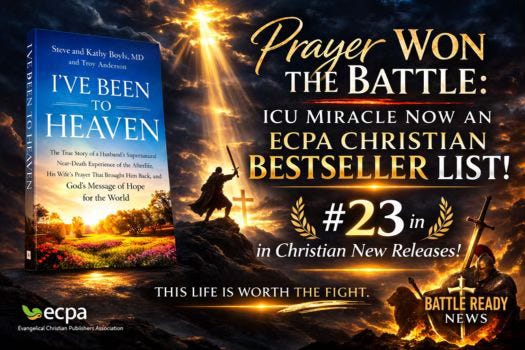
I’ve Been to Heaven by Steve and Kathy Boyls, M.D., and Troy Anderson — now #23 on the ECPA Christian Bestsellers List and the #1 “Hot New Release” in “Near-Death Experiences” on Amazon. Discover a powerful firsthand glimpse of eternity and the hope found in Jesus Christ.
The Final Victory of the King
The book of Revelation does not mention Persia by name, but it reveals the final destination of history. The end of the story does not belong to rogue regimes, hostile coalitions, or rebellious nations. It belongs to Jesus Christ.
In Revelation 19, the heavens open and Christ appears as the victorious King, riding forth in righteousness to judge and make war. The powers of darkness are overthrown. The rebellion of the nations is broken. The kingdoms of this world do not have the last word.
Then comes a glorious promise in Revelation 21:24: “The nations will walk by its light, and the kings of the earth will bring their splendor into it.” Even that hint is profound. Nations that once raged, rebelled, and resisted will one day stand under the light of the King.
The final word of biblical prophecy is not chaos. It is Christ.
Judgment and Redemption: Iran’s Future in Bible Prophecy
When all the passages are brought together, a stunning picture emerges. Iran appears in Scripture under several names—Persia, Elam, Media—and under each name we see another layer of its prophetic identity. It is there in the origins of nations. It is there in the rise of empire. It is there in the restoration of Jerusalem. It is there in Daniel’s visions. It is there in Esther’s deliverance. It is there in the birth of the Messiah. It is there in Ezekiel’s end-times war. And it is there in Jeremiah’s promise of eventual restoration.
Very few nations occupy such a sweeping arc across the pages of Scripture. That is why Iran matters in Bible prophecy. Not because every headline is automatically the fulfillment of a verse, but because the Bible has already marked this nation as significant in the unfolding story of the last days.
Iran’s future in prophecy appears to include both judgment and the possibility of redemption. And that means believers must hold both truths at once: sobriety and hope.

“Nations rage, kingdoms shake; He lifts His voice, the earth melts. The Lord of hosts is with us.” — Psalm 46:6–7 (Abbreviated)
Two books. One divine blueprint. Discover how prophecy, power, and disruption are shaping America’s destiny. The Trump Code & Designated Disrupter.
Go Deeper: Books Exploring Prophecy, Revival, and Global Upheaval
Over the years, I’ve spent much of my career investigating the intersection of Bible prophecy, global events, and the spiritual forces shaping our time. Many of the themes explored in this article—rising geopolitical tensions, the role of nations in prophecy, spiritual warfare, and the hope of revival—are examined in greater depth in several of the books I’ve written or co-authored.
In The Trump Code, I explore the extraordinary historical parallels surrounding the Trump family, the curious 19th century novels of Ingersoll Lockwood, The Baron Trump Collection, the deeper prophetic themes surrounding America’s destiny, and how major global events may align with biblical patterns. As the world watches escalating tensions in the Middle East—including the current confrontation with Iran—many readers have told me they believe the prophetic patterns discussed in that investigation are unfolding before our eyes.
In Revelation 911, written with Pastor Paul Begley, we examine the convergence of global crises—from wars and natural disasters to technological transformation—and how these developments may align with biblical warnings about the last days.
In Trump vs. the Beast, I explore the growing tension between faith, freedom, and emerging global systems that many believe echo the prophetic warnings found in Scripture about the rise of powerful end-times structures.
And in Designated Disrupter, I look at how God often raises unlikely leaders during moments of global upheaval to challenge entrenched systems and spark spiritual awakening—reminding us that even in times of shaking, God is still moving through history.
Taken together, these investigations point to a sobering but hopeful reality: while the world may be entering a period of profound shaking, God’s purposes are still unfolding—and revival can emerge even in the most unexpected places.
A Nation at the Crossroads
The biblical story of Persia is unlike that of almost any other nation. Persia appears in Genesis in the origins of the post-Flood world. It appears in Isaiah as the empire that frees Israel. It appears in Daniel as a prophetic kingdom. It appears in Esther as the setting of Jewish deliverance. It appears in Matthew in connection with the worship of the Messiah. It appears in Ezekiel as part of a latter-day coalition. It appears in Jeremiah as a nation still offered restoration.
From beginning to end, Persia is there. That means the nation dominating today’s headlines may still have a profound place in God’s unfolding plan.
But perhaps the most important takeaway is this: Iran is not just a prophetic threat to analyze. It is also a nation of people made in the image of God—people living under oppression, searching for truth, and desperately in need of the gospel.
So the church must do more than watch the headlines. We must pray.
We must discern. We must remain anchored in Scripture.And we must remember that the God who named Cyrus, warned through Ezekiel, revealed the future to Daniel, and promised restoration to Elam is still ruling over the nations today.
A Prayer for the Nations in a Time of Prophecy
Heavenly Father,
You are the Lord of history, the King above every nation and every ruler. Long before empires rose and fell, You declared the end from the beginning. Nothing escapes Your sight, and no power can overturn Your purposes.
Today we lift up the people of Iran before You. Many live under fear, oppression, uncertainty, and spiritual darkness. We ask that Your light shine into every city, every home, and every heart. Let the gospel spread with power across Iran. Raise up bold believers, faithful pastors, underground churches, and courageous witnesses who will proclaim the name of Jesus Christ.
We also pray for Israel and for the peace of Jerusalem. Protect innocent lives. Restrain violence. Expose evil. Frustrate the plans of those who seek destruction, and let Your mercy triumph in the midst of conflict.
Give Your people discernment in these turbulent times. Keep us watchful, sober, faithful, and anchored in Your Word. Guard us from fear, speculation, and confusion. Teach us to pray with authority, live with holiness, and stand with courage as history moves toward its appointed end.
And above all, we look forward to the day when every nation will bow before the King of Kings and the Lord of Lords, when wars will cease, darkness will flee, and the glory of Christ will cover the earth.
In the mighty and matchless name of Jesus Christ, we pray.
Amen.
📚 Dive into Troy Anderson’s Prophetic Books:
📖 Trump vs. The Beast
📖 Designated Disrupter
📖 I’ve Been to Heaven
📖 The Trump Code
📖 Revelation 911
📖Your Mission in God’s Army
📖The Military Guide to Disarming Deception
📖The Military Guide to Armageddon
📖Trumpocalypse
📖The Babylon Code
Each of these books is more than a story—they are a call to courage, revival, and prophetic insight for such a time as this.

Your Book. Your Vision. Your Legacy! We believe your story matters. Whether you’re writing to impact hearts, spark revival, or leave a legacy for generations,
our team of bestselling ghostwriters, editors, and publishing experts will help bring your vision to life—from the first word to final release. Let’s write a story that echoes into eternity. Visit www.inspireliterary.com to start your journey today. Contact six-time #1 bestselling author and Inspire Literary Group Founder Troy Anderson at troyanderson@inspireliterary.com or 949-887-1511 for a free consultation on your book/film/TV series idea.